

Shipping fragile resin models internationally is different from mailing ordinary collectibles because cured resin can be rigid, brittle, detailed, and vulnerable to pressure on thin parts. A miniature wing, mirror, weapon, antenna, spoiler, or wheel arch can break even when the outer box looks almost untouched.
The safest approach is to think in layers: protect the model itself, immobilize it inside an inner box, cushion that inner box inside a stronger outer box, and prepare the customs paperwork clearly. This reduces movement, spreads impact, and makes the parcel easier for carriers and customs teams to process.
Many damaged resin models are not broken by one dramatic accident. In practice, damage often comes from vibration, loose voids, corner compression, stacking pressure, or a small part touching the wall of the box. That is why careful packaging matters more than simply adding a “Fragile” label.
International shipping also adds extra risks: longer transit time, more handling points, customs inspection, climate changes, and possible repacking if the shipment is opened. A package that survives a local delivery may not survive a long cross-border route unless it is packed with enough structure.
This guide explains how to prepare, package, label, and ship resin models with a practical method suitable for collectors, custom builders, small online sellers, and hobbyists who want to reduce avoidable damage without overcomplicating the process.
Important safety note: this guide is for cured resin models and similar finished collectibles. Do not ship uncured resin, solvents, aerosols, paints, adhesives, batteries, or chemical products internationally unless you have confirmed the carrier’s hazardous materials rules and the destination country’s import requirements.
Safe International Packaging for Fragile Resin Models
The main goal when packing a fragile resin model is to stop the model from moving and to keep pressure away from delicate parts. The model should never touch the outer shipping box directly, and it should not be able to slide, rotate, or bounce inside the package.
A good package uses both soft protection and firm structure. Soft materials such as bubble wrap, foam sheets, tissue, or soft polyethylene foam protect painted surfaces and delicate details. Firm materials such as corrugated cardboard, foam board, rigid inserts, or an inner box prevent crushing and help distribute pressure.
One common mistake is wrapping the model tightly in bubble wrap and placing it in a box with loose filler. That may look safe, but if the model has thin parts, the bubble wrap can press against them during transit. For resin miniatures, car replicas, figures, and custom parts, it is often safer to create space around fragile details instead of forcing them into direct contact with cushioning.
| Model feature | Main risk during shipping | Safer packaging approach |
|---|---|---|
| Thin antennas, mirrors, wings, spoilers, or weapons | Snapping from side pressure or vibration | Protect with a raised cavity, removable support, or separate wrapping if detachable. |
| Painted or clear-coated surfaces | Scratches, imprint marks, or surface rubbing | Use soft non-abrasive tissue or foam sheet as the first contact layer. |
| Heavy resin base or body shell | Breaking lighter parts attached to it | Immobilize the heavy section first and keep delicate sections away from box walls. |
| Clear resin windows or transparent parts | Cracking or cloudy pressure marks | Use gentle surface protection and avoid tight compression against the part. |
| Small loose accessories | Scratching the main model or getting lost | Bag and label accessories separately, then place them in a padded compartment. |
Materials You Should Prepare Before Packing
Choosing the right packaging materials is more important than using a large amount of random filler. Resin models need clean contact materials, stable cushioning, and a box strong enough to survive stacking and compression. Reused boxes can work only if they are rigid, dry, clean, and free from old labels or damage.
For most fragile resin models, the best setup is a double-box method: the model is protected inside a smaller inner box, and that inner box is suspended inside a larger outer box with cushioning on all sides. This method adds weight and size, but it usually gives better protection for international routes.
A practical rule is to avoid materials that collapse too easily or shift into one corner. Loose paper alone is rarely enough for high-detail resin models. Packing peanuts can help fill space, but they should not be the only material holding the model in place because they can settle during vibration.
- Use a rigid corrugated outer box with no crushed corners, tears, moisture damage, or weak seams.
- Prepare a smaller inner box or rigid tray to keep the model separated from the outer carton.
- Use soft tissue, foam sheet, or smooth bubble wrap as the first layer around painted surfaces.
- Use denser cushioning around the inner box so it cannot move inside the outer box.
- Use strong shipping tape, not masking tape, decorative tape, string, or thin office tape.
- Keep small accessories in separate labeled bags or small padded compartments.
- Place a duplicate address label inside the package in case the external label is damaged.
Step-by-Step Method to Pack the Model
The safest packing process starts before the first layer of wrap. Inspect the model carefully, identify weak points, and decide whether any part should be detached before shipping. If a removable part is likely to snap in transit, shipping it separately inside the same parcel may be safer than leaving it mounted.
Take photos before packaging. Photograph the finished model, the fragile details, the wrapping process, the inner box, and the sealed outer box. This helps with customer communication, insurance claims, and proof that the item was packed responsibly before handoff.
-
Inspect and document the model.
Check for thin parts, previous repairs, magnets, glued joints, clear parts, painted surfaces, and heavy sections. Photograph the item from multiple angles before packing. This creates a record of condition and helps you choose where extra protection is needed.
-
Detach fragile parts only when it is safer.
If mirrors, weapons, spoilers, wheels, or accessories are designed to be removable, consider shipping them separately in a small padded bag. Do not force parts off if they are glued or painted in a way that may cause damage.
-
Protect painted surfaces with a soft first layer.
Use clean tissue, soft foam sheet, or a smooth protective layer before bubble wrap. Avoid rough paper directly on glossy paint because vibration may leave marks during a long trip.
-
Create clearance around delicate details.
Do not compress bubble wrap tightly around thin details. Build small protective voids or use shaped foam supports so pressure lands on stronger areas instead of fragile projections.
-
Immobilize the model inside an inner box.
Place the protected model in a rigid inner box or tray. Fill empty spaces firmly enough to stop movement, but not so tightly that the model is squeezed. The goal is controlled support, not pressure.
-
Suspend the inner box inside the outer box.
Place cushioning under, around, and above the inner box. The inner box should not touch the outer walls. If you gently shake the outer box, nothing inside should shift or knock.
-
Seal the package with the H-taping method.
Tape the center seam and both edge seams on the top and bottom of the box. Reinforce weak seams, but avoid covering the shipping label or customs barcode.
-
Label clearly but do not rely on labels alone.
Add the shipping label on the largest flat surface and make sure the barcode is smooth and readable. “Fragile” and “This Side Up” labels may help handlers notice the parcel, but they do not replace proper internal protection.
Double Boxing, Void Fill, and Movement Control
Double boxing is especially useful for resin models because it separates the fragile collectible from the impact zone. The outer box takes the hit; the cushioning absorbs part of the force; the inner box keeps the model organized and protected. For international parcels, this matters because the package may pass through conveyors, trucks, aircraft containers, customs areas, and local delivery networks.
The inner box should be just large enough to contain the wrapped model and its internal support. The outer box should be large enough to leave cushioning space around the inner box. If the outer box is too small, impacts transfer directly to the model. If it is too large and loosely filled, the inner box can gain speed inside the package and hit the walls repeatedly.
A useful test is the quiet package test. After sealing the inner box, move it gently. You should not hear rattling. After sealing the outer box, tilt it slowly in different directions. You should not feel the inner box sliding. If the parcel sounds active, it is not ready for international shipping.
| Packaging problem | What it usually means | How to fix it before shipping |
|---|---|---|
| The box rattles when moved | The model or inner box is not immobilized | Add firm void fill and retest until movement stops. |
| The model presses against the lid | There is not enough clearance above fragile parts | Use a taller inner box or adjust support points. |
| The outer box bulges | The package is overfilled or under too much pressure | Use a larger box and rebuild the cushioning layers. |
| Loose accessories touch the model | Small parts may scratch or chip the finish | Bag accessories separately and secure them away from the model. |
| Only one side has cushioning | The parcel may fail if dropped on another side | Cushion all six sides: top, bottom, left, right, front, and back. |
Customs Forms, Declarations, and International Labels
Customs paperwork is not just a formality. A resin model shipped internationally needs a clear description, accurate value, country of origin when required, package weight, and recipient details. Vague descriptions such as “gift,” “model,” or “item” may cause delays because customs teams need to understand what the parcel contains.
A better description is specific and plain, such as “painted cured resin scale car model,” “unpainted cured resin miniature figure,” or “cured resin collectible display model.” The right wording depends on the item, but it should explain what it is, what it is made of, and its purpose. Avoid calling a sale a gift if it is not a gift, because incorrect declarations can create problems for both sender and buyer.
Do not guess an HS code if you are unsure. Postal and carrier tools may help generate a code based on the description, but classification can vary by product type and destination country. When the value is high, the shipment is commercial, or the destination has strict import rules, confirm the details with the carrier, marketplace, customs broker, or official customs source.
- Use the recipient’s full legal name, complete address, phone number, and email when the carrier requests it.
- Describe the item clearly, including material and purpose, instead of using a vague category.
- Declare the real item value and include a commercial invoice when required.
- Check whether the destination country restricts certain collectibles, materials, paints, batteries, or accessories.
- Keep copies of the invoice, photos, tracking number, customs form, and shipping receipt.
- Do not include uncured resin, alcohol, solvent, spray paint, or other regulated substances unless properly classified and accepted by the carrier.
Choosing the Right Carrier, Service, and Insurance
The cheapest international service is not always the safest choice for fragile resin models. Lower-cost services may involve longer transit times, less detailed tracking, limited claims support, and more handoffs. For inexpensive replacement parts, that may be acceptable. For a rare custom model, the safer choice is usually a tracked service with declared value or suitable insurance options.
Before choosing a carrier, compare the maximum compensation, claim documentation requirements, tracking quality, delivery speed, prohibited items list, and signature options. Some carriers handle customs brokerage differently, and some destination countries may have stronger performance with one service than another.
For sellers, the decision should also consider customer expectations. If the buyer paid for a detailed custom resin model, unclear tracking or weak insurance can become a bigger problem than the shipping price. The best service is not always the fastest; it is the one that offers the most reliable balance of tracking, protection, delivery confirmation, and claim support for that specific parcel.
| Shipping choice | Best use | Important caution |
|---|---|---|
| Postal international service | Lower-value models, small parcels, buyers comfortable with local postal delivery | Tracking and claim handling may vary after the parcel enters the destination country. |
| Express courier service | Higher-value models, time-sensitive orders, commercial shipments | Brokerage fees, duties, and import charges may be higher depending on destination. |
| Declared value or insurance | Rare customs, limited editions, expensive painted models | Claims usually require proof of value, photos, packaging evidence, and timely reporting. |
| Signature delivery | Expensive shipments or addresses with theft risk | The recipient must be available or able to collect from a pickup location. |
| Professional packing service | Very fragile, heavy, oversized, or irreplaceable models | It adds cost, but may improve documentation and claim credibility. |
Common Mistakes That Damage Resin Models in Transit
A frequent mistake is packing the model as if it were flexible plastic. Cured resin can be strong in thick areas but brittle in thin sections. A small projection may not bend under pressure; it may snap. This is why the packing plan should protect weak points instead of only covering the entire model in more layers.
Another common problem is using too much compression. Tight packaging can be dangerous when the pressure lands on fragile details. The model should be held securely by stronger areas, while delicate parts should have clearance. When possible, supports should touch the base, underside, main body, or other solid sections rather than thin decorative elements.
International shipments also fail when the sender forgets about climate and time. Some tapes soften in heat, air pillows may lose firmness in temperature changes, and low-quality boxes can weaken in humid environments. For long routes, use materials that stay stable and avoid relying on one fragile packaging component.
| Mistake | Possible consequence | Better approach |
|---|---|---|
| Using only a padded envelope | Crushing, bending, or snapped thin parts | Use a rigid box, ideally with an inner box for fragile models. |
| Letting the model touch the outer box | Direct impact transfers to the item | Keep cushioning between the item and every outer wall. |
| Overtight bubble wrapping | Pressure breaks small details or marks paint | Use gentle first-layer protection and clearance around fragile points. |
| Vague customs description | Customs delay, rejection, return, or inspection problems | Use a clear description that states material, item type, and purpose. |
| No packing photos | Weak claim evidence if damage occurs | Photograph the item, inner packing, outer packing, and sealed parcel. |
Testing the Package Before Sending It
Testing does not guarantee that a package will survive every route, but it helps reveal obvious weaknesses before the parcel leaves your hands. The first test is movement. If the model moves inside the inner box or the inner box moves inside the outer box, the package needs more support.
The second test is pressure. Press gently on the top and sides of the sealed outer box. The box should not collapse easily, bulge, or make internal cracking sounds. If the package feels soft or unstable, the outer box may be too weak or the cushioning may not be distributed evenly.
The third test is orientation. Turn the parcel carefully on each side and listen. A well-packed resin model should remain quiet and stable. Do not rely on “This Side Up” arrows, because parcels may still be tilted or placed differently during transport. Pack the model as if any side could become the bottom for a short time.
- The model cannot rattle inside the inner box.
- The inner box cannot slide inside the outer box.
- All six sides have protective cushioning.
- No fragile detail is pressed directly against a hard surface.
- The outer carton keeps its shape when handled normally.
- The shipping label and customs documents are flat, visible, and secure.
- Old labels, barcodes, and hazardous markings have been removed or fully covered.
- Photos of the packaging process have been saved before shipment.
When to Ask for Professional Help or Carrier Support
Professional help is worth considering when the resin model is expensive, irreplaceable, oversized, unusually heavy, or made with many thin protruding parts. A custom diorama, large garage kit, museum-style model, or high-value painted commission may need a stronger packing method than a small hobby parcel.
Carrier support is also useful when the package includes anything beyond a cured resin model. Paint, primer, aerosol clear coat, solvent, uncured resin, magnets, batteries, electronics, or adhesives may change the shipping requirements. Some items may be restricted, prohibited, or accepted only with specific labels and documentation.
For commercial sellers, a customs broker or experienced international shipping provider can help when orders become frequent, values increase, or shipments go to countries with strict import controls. The cost may feel unnecessary at first, but it can prevent delays, returned parcels, and disputes caused by incorrect paperwork.
Conclusion
Shipping fragile resin models internationally requires more than a padded box and a warning label. The model needs clean surface protection, controlled support, double-box cushioning when appropriate, accurate paperwork, and a shipping service that matches the value and fragility of the item.
The safest method is to protect delicate details without squeezing them, immobilize the model inside an inner box, cushion that box inside a strong outer carton, and test the parcel before handoff. This approach reduces the common risks that damage fragile resin models during long-distance transit.
When the item is rare, expensive, unusually delicate, or connected to a commercial order, confirm requirements with the carrier, customs tools, or a professional packing service before shipping. A few extra minutes of preparation can prevent avoidable damage, delays, and difficult claims later.
FAQ
1. Can I ship cured resin models internationally?
In many cases, cured resin models can be shipped internationally as finished collectibles, model parts, miniatures, or display items, but the exact requirements depend on the carrier and destination country. The important distinction is that cured resin is different from uncured liquid resin. Do not include uncured resin, solvents, spray paints, or chemical accessories unless the carrier confirms they are allowed and properly classified. Always describe the item accurately on customs forms and check whether the destination country has restrictions on toys, collectibles, artwork, or plastic/resin goods.
2. Is bubble wrap enough for fragile resin models?
Bubble wrap can help, but it is rarely enough by itself for fragile resin models, especially international shipments. It protects against light impact and surface contact, but it may not stop movement, crushing, or pressure on thin parts. A safer method is to use a soft first layer, protect fragile details with clearance, place the model inside a rigid inner box, and cushion that inner box inside a stronger outer box. Bubble wrap should be part of a packaging system, not the entire system.
3. Should I double box every resin model?
Double boxing is strongly recommended for expensive, painted, delicate, or high-detail resin models. It is especially useful for international shipping because the parcel may be handled many times before delivery. For very small, inexpensive, and sturdy resin parts, a single rigid box with excellent internal cushioning may be acceptable, but a padded envelope is usually risky. If the model has thin details, a glossy finish, clear parts, or a heavy base, double boxing gives much better protection against impact and compression.
4. What should I write on the customs description?
The customs description should be specific, honest, and easy to understand. Instead of writing “gift,” “model,” or “resin item,” use a clearer description such as “painted cured resin scale model for display” or “unpainted cured resin miniature figure.” Include the material and purpose when possible. If the item was sold, do not mark it as a gift. Customs authorities may delay, reject, return, or inspect packages with vague or inaccurate descriptions, so clarity is part of safe international shipping.
Note: this article is for educational packaging guidance and does not replace carrier instructions, customs rules, hazardous materials regulations, or professional packing advice for high-value, regulated, or unusually fragile shipments.
Official References
- UPS — How to Pack Your Shipments
- FedEx — Packing Tips and How-to Guides
- USPS — U.S. Customs Forms for International Shipping
- World Customs Organization — What Is the Harmonized System?
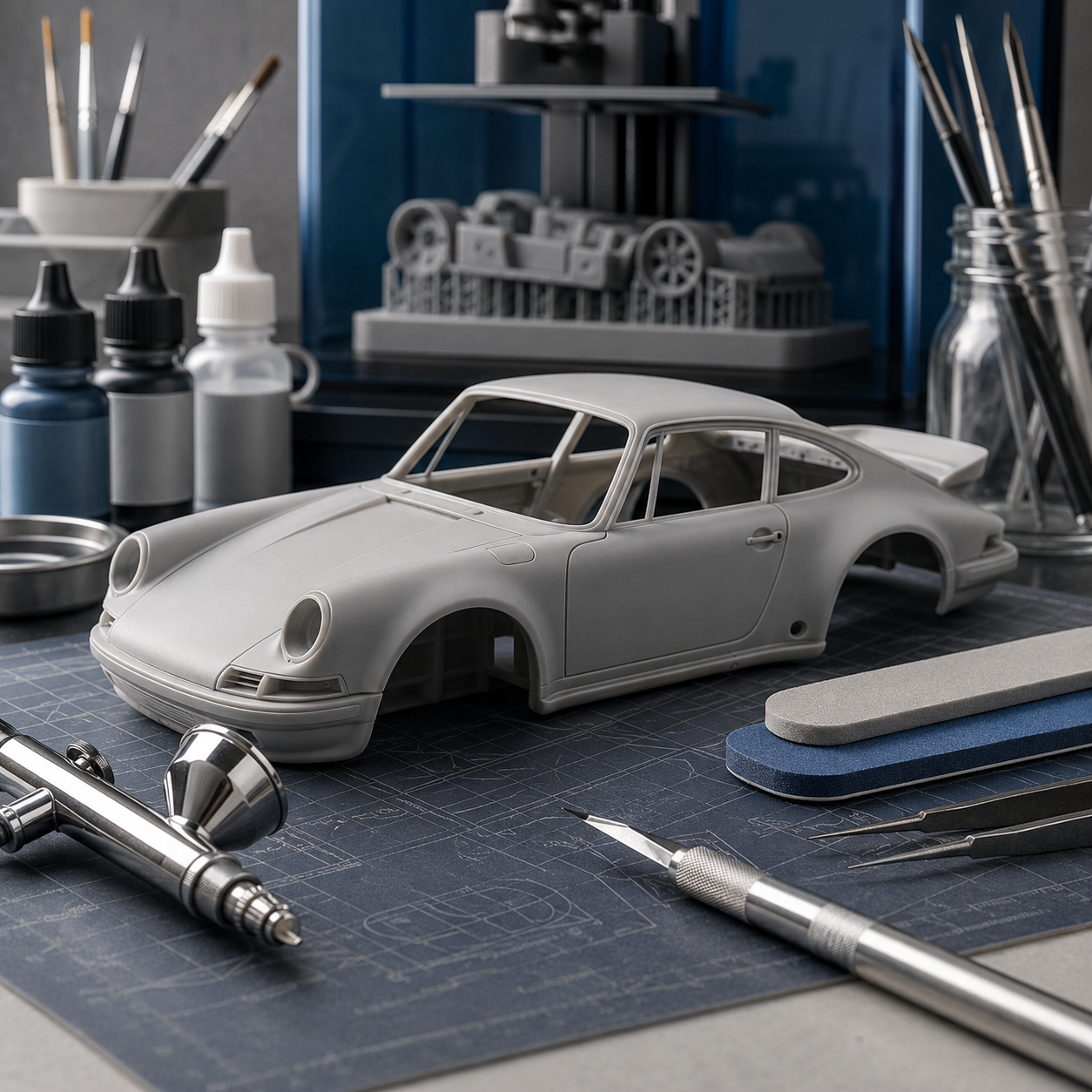
The LS Resin Lab Editorial Team publishes practical, detailed content about resin automotive models, scale-model painting, 3D-printing troubleshooting, surface finishing, airbrushing, and custom model-building techniques. Our guides are prepared for general educational purposes, with a focus on clear instructions, workshop safety, realistic results, and accessible information for hobbyists with different experience levels.